
When Software Stops Being a Tool and Starts Becoming an Environment
In this article
- Section 1: From Tools to Spaces
- Section 2: The Moment a Tool Stops Feeling External
- Section 3: Creating Inside the Interface
- Section 4: Why These Environments Feel Comfortable
- Section 5: The Quiet Risks of Living Inside Software
- Section 6: Choosing Awareness Over Dependence
- The Bottom Line
There was a time when software lived outside our thinking. You opened it to complete a task, closed it when the work was done, and moved on.
Tools were functional, replaceable, and clearly separate from the process of thought itself. That boundary is fading.
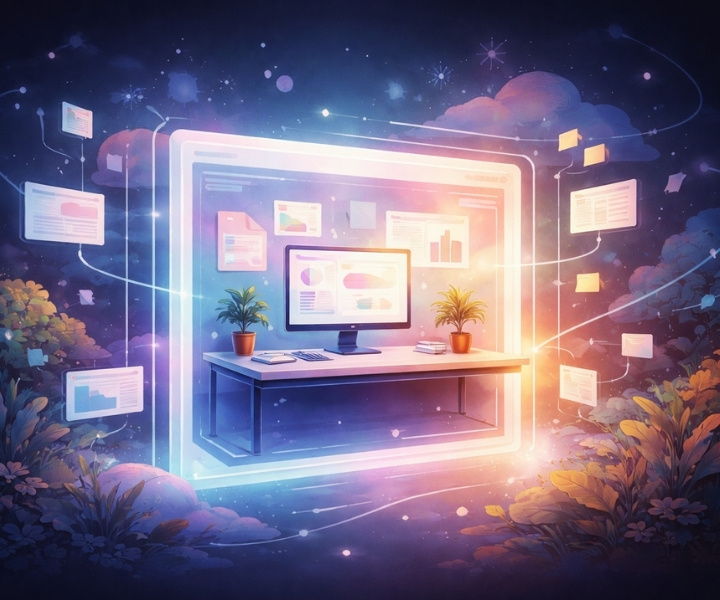
Today, some software no longer feels like something we use—it feels like a place we enter. Ideas take shape inside it. Decisions are refined within it.
Creation happens not before or after the interface, but through it. The software does not merely assist the work; it hosts it.
Work no longer begins at a blank page or ends with a saved file—it unfolds inside the space itself.
This shift often goes unnoticed because it feels natural. There is no dramatic moment when a tool becomes essential.
It happens quietly, over time, as thinking begins to start inside the software rather than around it.
What was once optional becomes familiar, and what is familiar becomes foundational.
For many creators and thinkers, a few platforms now serve as more than utilities.
They are where drafts live, where problems are explored, and where ideas return when they are not yet ready to be finished.
These environments do not replace thought—they provide it with continuity.
Understanding this change is essential, not to glorify software, but to recognize how deeply it has begun to shape the way we create, reflect, and work.
Section 1: From Tools to Spaces
For most of the digital age, software was designed to behave like an instrument
You opened it with intent, performed a specific action, and closed it once the task was complete.
The relationship was linear and transactional. The tool responded; the human decided.
That model no longer describes how many modern applications function.
Increasingly, software is designed to remain open, persistent, and responsive across time.
This convergence of behavior across apps is part of a broader pattern shaping modern software design.
Work does not begin when the application opens, nor does it end when it closes.
Instead, ideas accumulate inside the interface, waiting to be revisited, refined, or reworked.
The software becomes a container for ongoing thought.
This change is not cosmetic. It alters the role software plays in the creative process. A tool supports an action.
A space supports presence. When software becomes spatial rather than functional, it stops acting as an extension of the hand and starts acting as an extension of the mind.
In this model, users do not simply execute tasks—they inhabit workflows.
The interface is no longer a surface to pass through, but a structure that shapes how thinking unfolds.
Choices are influenced by what is visible, what is easy to access, and what the environment subtly encourages.
The shift from tool to space marks a turning point in how we relate to technology.
It explains why certain applications feel indispensable without being dramatic, and why leaving them can feel less like closing a program and more like stepping out of a room.
This distinction sets the foundation for understanding modern software—not as utilities we briefly engage with, but as environments we repeatedly return to.
Section 2: The Moment a Tool Stops Feeling External
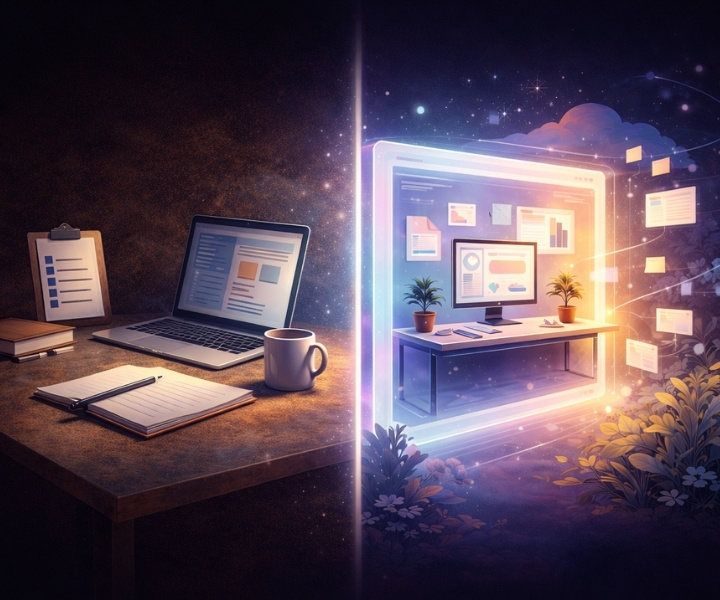
There is a quiet moment when a tool stops feeling separate from the work.
It is not marked by dependency or dramatic reliance, but by a change in where thinking begins.
You no longer prepare ideas before opening the software. You open the software to think.
This is the point at which a tool becomes an environment.
For many creators, platforms like Canva are no longer just design utilities.
They are spaces where ideas arrive half-formed and leave refined. Layouts are not merely assembled; they are explored.
Fonts, spacing, and visual rhythm are adjusted not as final steps, but as part of the thinking process itself.
The interface becomes a workspace for experimentation, not execution.
Similarly, tools like ChatGPT are not experienced as answer machines when used thoughtfully.
They function more like a room for dialogue—where questions are shaped through conversation, arguments are tested, and clarity emerges through iteration.
The value lies not in the response alone, but in the continuity of thought the environment supports.
What connects these experiences is not automation, but presence. The work does not feel fragmented across tabs or tools.
It remains contained within a single, responsive space. Ideas stay visible. Context is preserved. Momentum is maintained.
This is the defining characteristic of software that has become an environment: it reduces the need to constantly step outside the process.
Instead of interrupting thought, it holds it. Instead of demanding completion, it allows return.
The moment a tool stops feeling external is the moment it begins shaping not just what we make, but how we think while making it.
Section 3: Creating Inside the Interface
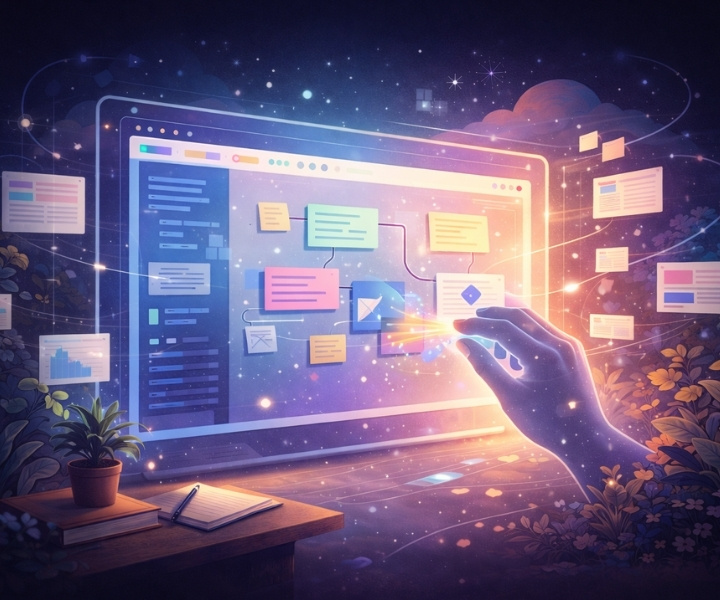
When software becomes an environment, creation no longer happens in isolation.
It unfolds inside the interface itself, shaped by what is visible, available, and encouraged at each moment.
Ideas are no longer fully formed before entering the workspace. They arrive incomplete.
The interface becomes the place where they are tested, rearranged, and gradually clarified.
Creation turns into an iterative movement rather than a linear process.
This is a significant change.
In traditional workflows, thinking happened elsewhere—on paper, in the mind, or through conversation—before being translated into software.
The tool was the final step. Today, the interface is part of the thinking loop.
Adjustments are made not because a decision has been reached, but because the environment invites experimentation.
Inside an interface, attention follows structure:
- Easy to modify gets modified
- Visible stays under consideration
- Hidden is often forgotten
The structure of the interface subtly guides attention.
Grids encourage alignment. Suggestions invite alternatives. Prompts shape direction.
None of these elements force decisions, but together they influence the rhythm of thought.
Creativity becomes responsive to the space in which it occurs.
This does not diminish human agency.
It reframes it. Working inside an environment reduces friction between idea and execution.
The cost of trying something new is low, so exploration becomes natural.
At the same time, the boundaries of the environment define what feels possible.
Thinking adapts to the contours of the space, often without conscious awareness.
Creating inside the interface means that software no longer waits for intention—it participates in its formation.
The environment becomes a collaborator of sorts, not by generating ideas, but by holding them long enough to evolve.
This is why modern software feels immersive rather than instrumental.
It does not merely respond to commands. It creates conditions in which thinking can continue.
Section 4: Why These Environments Feel Comfortable
The comfort of modern software environments is not accidental.
It is carefully shaped through continuity, responsiveness, and the absence of friction.
These spaces are designed to feel familiar quickly and accommodating over time.
One reason is persistence. Work remains exactly where it was left.
There is no need to reconstruct context or regain momentum. When an environment remembers for you, returning feels effortless.
The mental cost of re-entry is low, and that ease encourages continuity.
Another factor is responsiveness. Immediate feedback—whether visual, textual, or structural—creates a sense of dialogue.
Actions are acknowledged instantly, reinforcing the feeling that the environment is attentive.
This responsiveness does not rush decisions; it simply reduces hesitation.
There is also a subtle sense of safety. Inside these environments, ideas can exist without commitment.
Drafts can remain unfinished.
Questions can be explored without pressure for finality.
The space allows for ambiguity, which makes it inviting to return to when clarity is still forming.
Most importantly, these environments minimize interruption.
Context stays intact. Distraction is reduced not by force, but by containment.
Instead of moving between tools, files, and mental states, work remains centered in one place.
Comfort, in this sense, is not indulgence.
It is stability. And stability makes creative and intellectual work feel sustainable rather than exhausting.
This is why software that becomes an environment often feels indispensable—not because it replaces effort, but because it reduces unnecessary friction around it.

Section 5: The Quiet Risks of Living Inside Software
When software becomes an environment, its influence extends beyond convenience.
The same qualities that make these spaces comfortable also shape how thinking unfolds within them.
One subtle risk is narrowing. Every environment has boundaries—what it makes visible, what it prioritizes, and what it quietly leaves out.
Over time, thinking adapts to those boundaries.
Ideas tend to follow the paths that are easiest to pursue.
Alternatives that fall outside the structure of the interface receive less attention, not because they are weaker, but because they are less supported.
Another risk lies in dependency on continuity.
When work feels safest inside a single environment, stepping outside it can feel disruptive.
Reflection, pause, or disconnection may seem inefficient rather than necessary.
The habit of returning quickly can replace the habit of stepping back.
There is also the question of authorship.
When environments suggest layouts, phrasing, or directions, they subtly participate in shaping outcomes.
This does not remove human intent, but it does influence its expression.
The line between assistance and guidance becomes less distinct.
Most importantly, living inside software can reduce awareness of exit points.
Environments are designed to be re-entered easily, but they do not always encourage departure.
Without conscious effort, presence can turn into persistence—staying not because the work requires it, but because the space is comfortable.
These risks are not failures of technology. They are natural consequences of environments that work well.
Recognizing them is not a rejection of modern software, but a reminder that awareness must remain active when tools begin to feel like places.
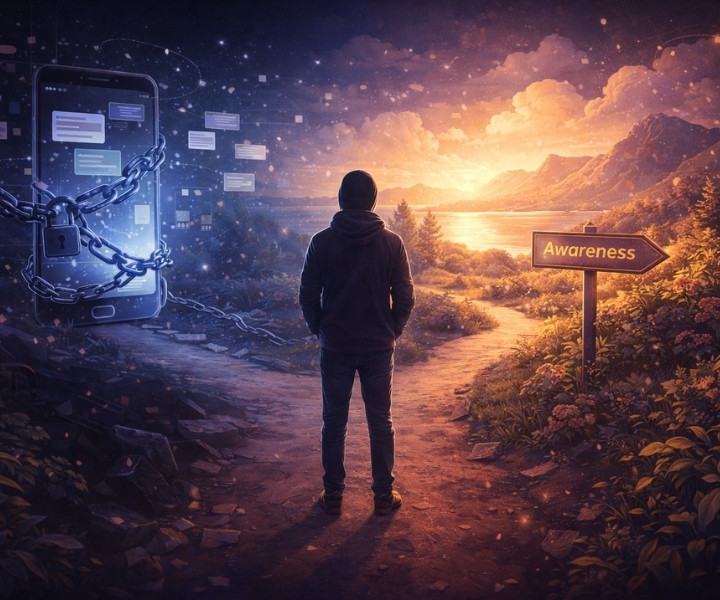
Section 6: Choosing Awareness Over Dependence
The shift from tool to environment does not demand resistance. It demands awareness.
Software that supports thinking, creativity, and continuity is not something to avoid.
It is something to engage with deliberately.
The difference between use and dependence is not measured by frequency, but by attentiveness—by knowing when the environment is supporting the work and when it is quietly shaping it.
Awareness begins with recognizing that environments influence behavior.
They frame possibilities, guide attention, and suggest rhythms of work.
When this influence is acknowledged, it can be used consciously rather than absorbed passively.
Choosing awareness means allowing space for exit.
It means stepping outside the interface to reflect, decide, or simply pause.
Not because the environment is harmful, but because thinking benefits from contrast.
Perspective often emerges at the boundary between engagement and distance.
It also means treating software as a collaborator, not an authority.
Environments can host ideas without owning them.
They can support process without defining outcome.
The responsibility for direction remains human.
In this way, modern software can remain deeply valuable without becoming invisible.
Awareness keeps the relationship balanced. It preserves agency within comfort.
The Bottom Line
Software becoming an environment is neither progress nor decline.
It is a shift in how work, thought, and creativity are held.
When tools host our processes, they gain influence—not by force, but by proximity.
They shape rhythm, attention, and possibility simply by being where thinking occurs.
This influence is not inherently dangerous, but it is never neutral.
The responsibility, then, does not lie with the software alone.
It lies with how consciously we inhabit these environments.
Awareness preserves choice. Distance preserves perspective. Intent preserves authorship.
Modern software can be a powerful place to think, create, and refine—so long as we remember that it is still a place we enter, not one we surrender to.
The moment we stop noticing that difference is the moment a tool stops serving us and quietly begins to define us.